Two affordable housing projects developed by China State Construction Engineering Corporation (CSCEC) in Shenzhen have received the Green Project Management Best Practice award at the third Gephson Awards ceremony held in Chengdu, China. The recognition highlights the projects’ use of modular integrated construction (MiC) technology to improve construction efficiency, reduce environmental impacts and expand access to affordable rental housing.
The award-winning developments are Huazhang Xinzhu in Shenzhen’s Longhua District and Anju Jingxinyuan in Futian District. Both projects demonstrate how advanced construction techniques and factory-based production can support large-scale residential development while reducing construction time and material waste.
The Gephson Awards ceremony was organized by the American Association of Project Management (AAPM). The awards aim to identify and recognize global best practices in green project management through an independent, objective and international evaluation process. This year, 67 projects received awards, with entries assessed on innovation, practicality, scalability, and the integration of environmental, social and governance (ESG) principles.
The recognition of the two CSCEC developments underscores the growing role of industrialized construction methods in delivering sustainable housing and improving project performance.
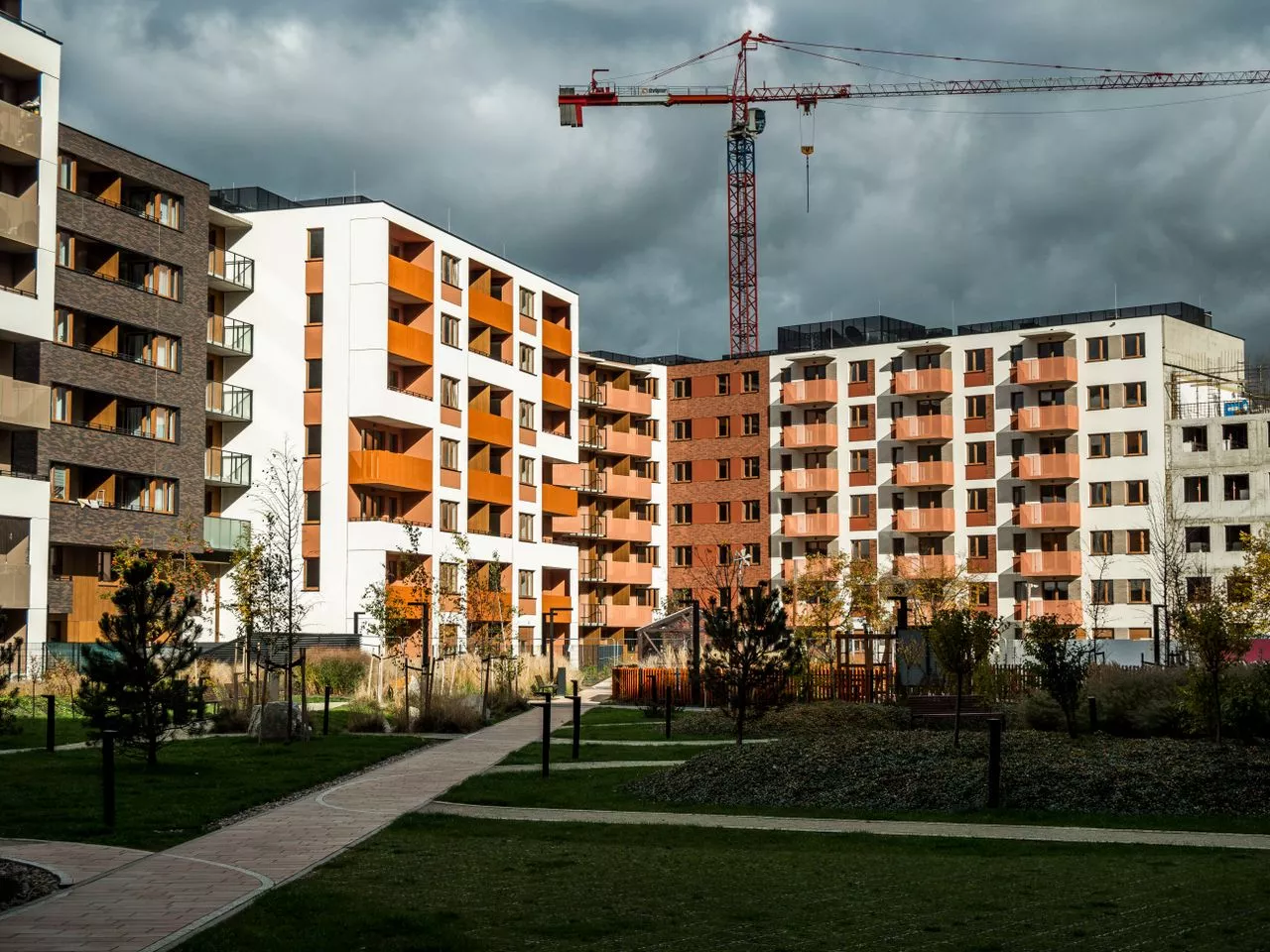
Located in Shenzhen’s Longhua District, Huazhang Xinzhu is a major residential development designed to provide affordable rental accommodation. The project has a gross floor area of approximately 173,600 square meters and comprises five residential towers, including two 29-story buildings and three 28-story buildings.
Together, the towers provide 2,740 affordable rental apartments, contributing to the supply of housing for residents seeking more accessible rental options in the city.
One of the project’s key features is its extensive use of modular integrated construction technology. The construction team divided the five towers, each nearly 100 meters tall, into 6,028 individual modules. Much of the work was completed in controlled factory environments before the modules were transported to the construction site for assembly.
More than 70 percent of the construction work was completed in factories, reducing the amount of work required at the site. This approach helped the project team improve coordination between manufacturing and on-site installation while limiting the time needed for conventional construction activities.
The development was completed in just one year. According to the project information, this represented a reduction in construction time of more than 60 percent compared with traditional building methods.
The project also incorporated full life-cycle digital delivery through building information modeling (BIM), making it a notable example of the application of digital technologies to modular residential construction in China. BIM supports the coordination and management of building information across different project stages, helping teams organize design, manufacturing and construction activities.
By combining digital delivery with modular construction, Huazhang Xinzhu demonstrates how large residential developments can be planned and delivered with greater efficiency.
The second award-winning development, Anju Jingxinyuan, is located in Shenzhen’s Futian District. The project has a gross floor area of approximately 44,500 square meters and includes two underground floors and 30 floors above ground.
The building provides 696 affordable rental apartments, adding to the district’s residential housing supply.
Like Huazhang Xinzhu, Anju Jingxinyuan uses modular integrated construction to move a significant proportion of building activities away from the construction site and into factory production facilities.
The project team divided the building into 800 functional modules, with more than 90 percent of the work completed in factories. The modules were then transported to the site for lifting, installation and integration into the completed building.
This method significantly accelerated the construction process. From the lifting of the first module through interior finishing and the building’s topping-out milestone, the project took just 148 days.
The reported construction period was approximately 14 months shorter than would have been required using traditional construction methods.
The results illustrate the potential of modular construction to shorten project schedules, particularly when manufacturing, transportation and on-site assembly are carefully coordinated. Completing more work in factories can also help improve consistency and reduce the effects of weather and other site-related disruptions.
For affordable housing projects, faster delivery can help bring completed homes into use sooner while improving the efficiency of construction resources.
Modular integrated construction is a building approach in which substantial portions of a structure are manufactured in factories and subsequently assembled at the construction site. By transferring work into controlled production environments, the method can improve construction planning, reduce on-site activities and support more efficient use of materials.
The technology offers several environmental benefits compared with conventional construction methods.
According to the project information, MiC can reduce construction waste by more than 75 percent and material waste by more than 25 percent. These reductions are associated with more controlled manufacturing processes, improved material planning and more efficient production.
The approach also helps reduce the amount of work carried out directly at construction sites. This can limit noise, dust, vehicle movements and other activities that may disrupt nearby communities.
Across the reported project figures, modular construction also reduces carbon emissions during construction by approximately 4,190 metric tons. This highlights the potential contribution of industrialized building methods to lowering the environmental impact of residential development.
However, actual environmental performance depends on factors such as material selection, factory energy use, transportation distances and construction practices.
The Gephson Awards recognize projects that demonstrate practical approaches to green project management while incorporating innovation, scalability and ESG considerations.
The success of Huazhang Xinzhu and Anju Jingxinyuan highlights how modular construction can be applied to residential projects of different sizes while supporting faster delivery and more efficient resource use.
Both developments combine affordable rental housing with construction methods designed to reduce waste and improve productivity. Their recognition also demonstrates the potential of integrating digital tools, factory manufacturing and on-site assembly within a coordinated project delivery strategy.
As cities continue to address housing demand and environmental challenges, approaches that improve construction efficiency while reducing material consumption are becoming increasingly important.
Through the two award-winning projects, CSCEC has demonstrated the practical application of modular integrated construction in Shenzhen’s affordable housing sector. The developments provide examples of how industrialized construction, digital coordination and sustainability-focused planning can contribute to future residential projects.
Source Link:https://english.cscec.com/