
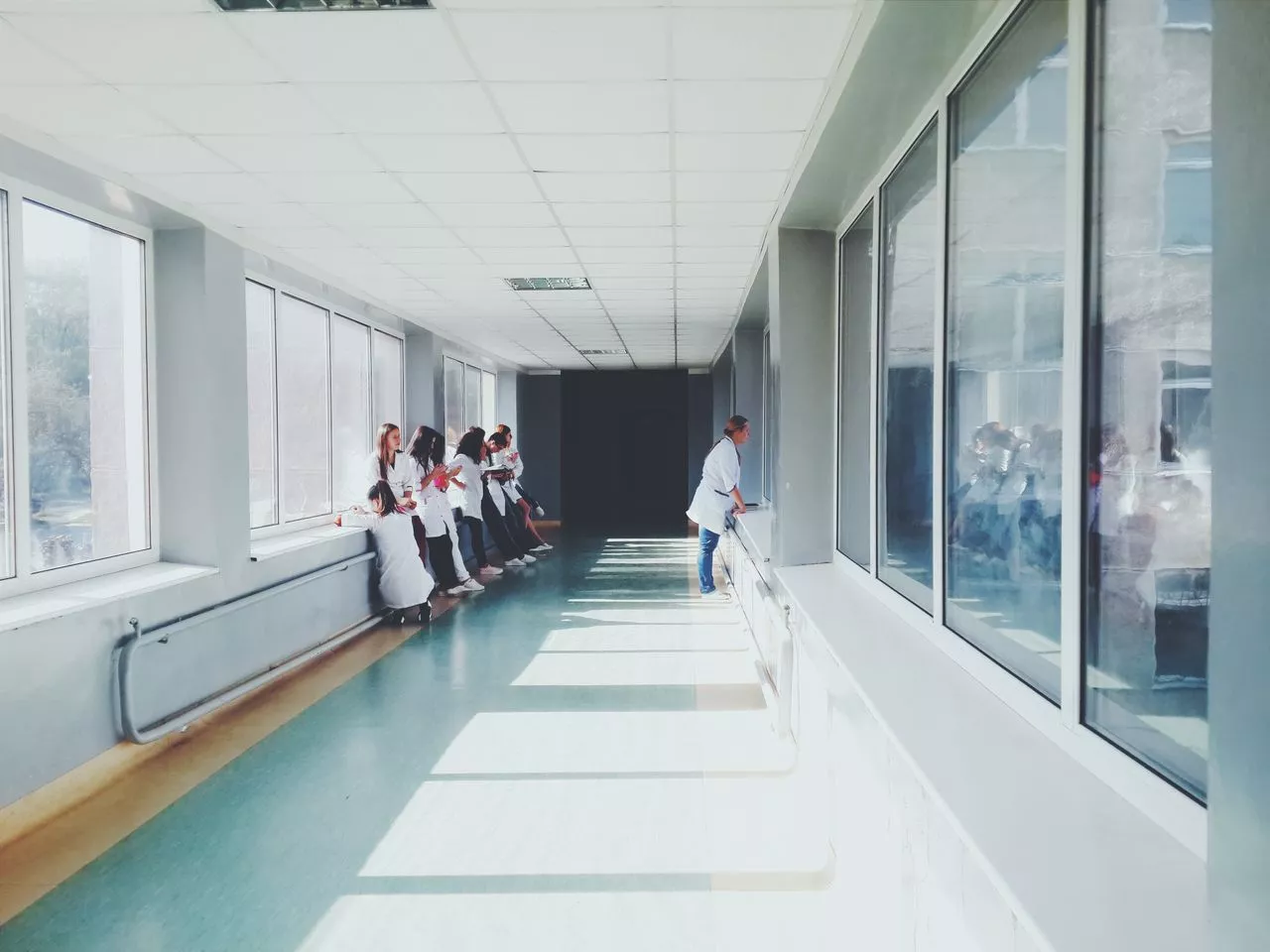
Healthcare environments are evolving as care delivery models, technology, workforce expectations and patient needs continue to change. Designing effective healthcare spaces now requires a broader approach that considers not only clinical functionality but also human comfort, operational efficiency, adaptability and the overall experience of care.
At the Healthcare Design Conference + Expo 2026, discussions with healthcare architects, interior designers and industry leaders highlighted several priorities shaping the future of healthcare facilities. KI, KI Wall and Pallas Textiles brought perspectives on movement, flexible environments, restorative design and material selection, emphasizing how the built environment can support patients, families, caregivers and healthcare professionals.
As emerging technologies and changing treatment models reshape healthcare delivery, designers face a significant challenge: creating spaces that meet current requirements while remaining adaptable to developments that may be difficult to predict even five years ahead.
These discussions identified four important considerations for healthcare design: supporting human performance, planning for adaptability, using materials to improve the care experience and designing environments that can respond to uncertainty.
Healthcare facilities serve many different groups, including patients, family members, physicians, nurses, caregivers and administrative staff. Each group has distinct physical, cognitive and emotional needs that influence how spaces should be planned and designed.
This broader perspective encourages designers to look beyond the primary function of individual rooms and consider how people experience the entire care journey. Factors such as intuitive wayfinding, comfortable furniture, appropriate sensory conditions and reduced cognitive demands can help create environments that are easier to navigate and use.
Trish Fedel, director of healthcare markets for KI, explained that healthcare design is increasingly moving beyond recovery-focused spaces toward environments that anticipate and prevent unnecessary stress.
Rather than responding only after discomfort occurs, designers can consider how layouts, furniture and environmental features may support people’s needs from the beginning.
Movement is another important element in this approach. The Kiaura Collection™, developed with Cognetic Technology™ designed and invented by Aaron DeJule, incorporates responsive movement across different seated experiences. The collection is intended to support activities ranging from work and collaboration to care and relaxation.
The products received significant recognition at the Healthcare Design Conference + Expo, earning 10 Nightingale Awards collectively. Kiaura received Best of Competition, while Cognetic Technology earned Best of Innovation.
These awards highlight growing industry interest in movement-centered design and its potential role in supporting comfort and human performance across healthcare settings.
Healthcare delivery is increasingly extending beyond traditional inpatient hospitals into outpatient clinics, ambulatory care centers and other specialized facilities. As these models develop, healthcare organizations must reconsider how their buildings support treatment, staffing, technology and patient access.
Facilities designed around today’s operational requirements may need substantial changes as services expand or care models evolve. However, hospitals and other healthcare providers cannot always suspend operations for extensive renovations.
Adaptability is therefore becoming an important consideration during the early stages of facility planning. Designers are increasingly exploring solutions that allow spaces to be reconfigured with less disruption, helping organizations respond to changing requirements while maintaining daily operations.
Ryan Usiak, vice president of sales and operations for KI Wall, emphasized that future-proofing does not necessarily mean predicting precisely how healthcare facilities will operate a decade from now. Instead, organizations need environments that can respond effectively when circumstances change.
KI Wall’s modular architectural solutions support this approach by allowing designers to consider future reconfiguration as part of the initial planning process.
Modular systems can help healthcare organizations evaluate how spaces might accommodate new functions, changing workflows or updated operational requirements. The suitability of any solution depends on the facility’s technical, regulatory and performance needs.
By considering flexibility early, healthcare providers can make more informed decisions about long-term facility planning and reduce dependence on major reconstruction when requirements change.
Healthcare materials must meet demanding requirements for durability, cleanability, safety and performance. At the same time, clinical and care environments should feel welcoming and comfortable for the people who use them.
Color, pattern, texture and material selection can influence how patients and visitors perceive a space. Thoughtful design choices can introduce warmth, visual interest and a more restorative atmosphere without overlooking the practical requirements of healthcare facilities.
Pallas Textiles highlights how textiles can contribute to this balance by combining visual and tactile qualities with performance characteristics suitable for commercial interiors.
Dean Lindsley, vice president at Pallas Textiles, noted that healthcare environments deserve the same level of design consideration as other spaces. He emphasized the ability of color, pattern and texture to introduce character and creative expression while meeting the demands of these settings.
For architects and interior designers, the challenge is to select materials that support both the intended appearance and the functional requirements of each application.
This may involve evaluating maintenance needs, durability, cleaning protocols and relevant safety standards alongside aesthetic considerations.
When these factors are addressed together, material selection can contribute to healthcare environments that support a more positive experience for patients, families and staff.
Artificial intelligence, emerging medical technologies and changing treatment models are creating new possibilities for healthcare delivery. These developments may influence clinical workflows, patient interactions, staffing requirements and the way healthcare organizations use physical space.
However, the speed of technological change makes it difficult to predict exactly what facilities will require in the coming years.
Fedel observed that care environments designed today may look significantly different from those healthcare organizations need within five years. As technology reshapes healthcare operations, designers must consider how buildings can accommodate evolving requirements rather than focusing exclusively on current needs.
This approach places greater emphasis on flexibility, forward-looking planning and collaboration among architects, interior designers, manufacturers, facilities teams and healthcare leaders.
Early collaboration can help project teams identify potential challenges, evaluate alternative configurations and select solutions that allow facilities to respond to future changes.
Designing for uncertainty also requires balancing flexibility with immediate functionality. Healthcare spaces must continue to support current clinical activities, safety requirements and operational demands while providing opportunities for future adjustments.
Rather than relying on a single prediction about the future of healthcare, adaptable environments can give organizations greater capacity to respond as new needs emerge.
The discussions at the Healthcare Design Conference + Expo 2026 reinforced the importance of considering people, performance and long-term adaptability together.
High-performing healthcare environments are not created through a single product or design decision. They emerge from coordinated choices involving furniture, architecture, modular systems, materials and spatial planning.
Supporting movement and human performance, preparing facilities for changing care models, selecting materials that balance aesthetics with functionality and accommodating technological uncertainty can all contribute to more responsive healthcare environments.
KI, KI Wall and Pallas Textiles highlighted how their respective approaches address different aspects of this challenge, from movement-centered furniture and modular architectural solutions to textiles designed for commercial applications.
Ultimately, healthcare design is about creating environments that support how people move, heal, work, recover and connect. By bringing these considerations into the planning process early, healthcare organizations and design professionals can develop spaces that serve today’s needs while remaining better prepared for tomorrow’s challenges.
Source Link:https://www.businesswire.com/