AECOM Opens New Asia Headquarters in Hong Kong to Drive Innovation, Collaboration and Sustainable Infrastructure
AECOM, the global infrastructure consulting firm, has officially opened its new Hong Kong office and Asia headquarters at 83 King Lam Street in Cheung Sha Wan, marking a significant milestone in the company’s long-term commitment to the region. The new workplace has been designed to bring together people, advanced technology, and sustainable design principles in a modern environment that supports collaboration, innovation, and future growth across Asia.
The opening ceremony welcomed clients, industry partners, employees, and distinguished guests, including Jill Hudkins, Global Chief Executive of AECOM Advisory, highlighting the importance of Hong Kong as one of the company’s key regional hubs.
The new headquarters represents AECOM’s largest office investment in Asia to date and reflects the company’s confidence in Hong Kong’s continued role as a leading center for infrastructure development, engineering excellence, and business innovation.
More than simply relocating its offices, AECOM has created a workplace that serves as a living example of how the company approaches modern infrastructure projects—combining sustainable design, digital technology, employee wellbeing, and multidisciplinary collaboration under one roof.
The office has been carefully planned to demonstrate the same principles AECOM applies when helping governments, developers, and private-sector clients deliver complex infrastructure projects worldwide.
The new headquarters also reinforces AECOM’s longstanding relationship with Hong Kong.
For more than five decades, the company has contributed to many of the city’s most significant infrastructure, transportation, commercial, and urban development projects. As Hong Kong embarks on another period of large-scale transformation, AECOM intends to play an important role in shaping the next generation of sustainable development across the region.
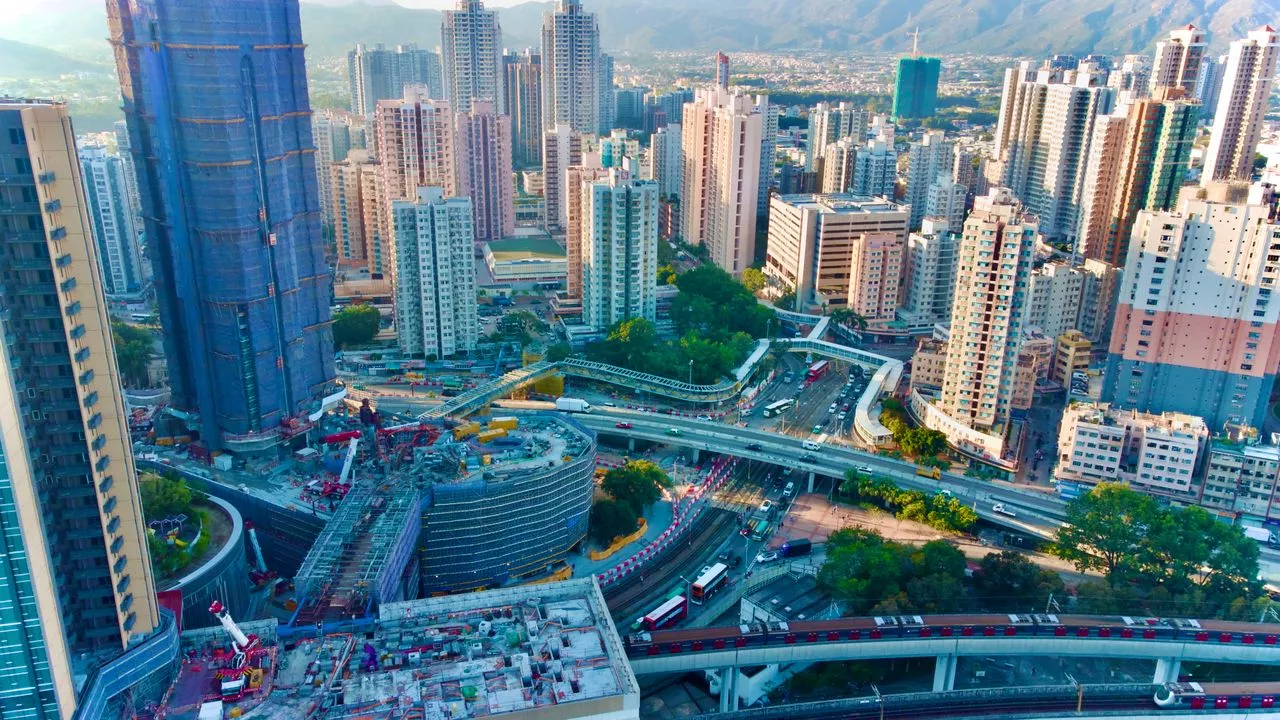
Major initiatives such as the Northern Metropolis and SKYTOPIA are expected to reshape Hong Kong’s urban landscape, creating substantial opportunities for engineering, planning, transportation, environmental, and construction professionals.
By expanding its regional headquarters, AECOM is strengthening its ability to support these and other strategic projects while leveraging expertise from across its extensive Asia-Pacific operations.
Ian Chung, Chief Executive of AECOM’s Asia region, said the new headquarters reflects the company’s strong confidence in Hong Kong’s future as well as its continued commitment to the region.
He explained that the investment represents AECOM’s largest office development in Asia and demonstrates the company’s belief in Hong Kong’s long-term economic and infrastructure growth.
According to Chung, AECOM has partnered with clients and communities throughout Hong Kong for more than 50 years, contributing to the city’s transformation into one of the world’s leading metropolitan centers.
He said the new workplace will strengthen collaboration across multidisciplinary teams while creating greater opportunities for innovation, enabling the company to better support clients as Hong Kong enters its next phase of development.
Chung added that the headquarters positions AECOM to continue working alongside government agencies, private developers, and industry partners to help build the city’s future.
Johnny Cheuk, Executive Leader for AECOM Hong Kong, emphasized the importance of creating an environment that encourages collaboration and innovation.
He noted that as Hong Kong enters a new era of urban development, bringing together people from different technical disciplines has become increasingly important.
The office has therefore been designed to foster teamwork across engineering, architecture, planning, environmental consulting, digital services, and project management functions.
According to Cheuk, the future-ready workplace strengthens AECOM’s ability to deliver integrated solutions while helping clients address increasingly complex infrastructure challenges.
He said the collaborative environment also supports knowledge sharing and innovation, allowing employees to combine expertise across multiple disciplines to develop better outcomes for clients and communities.
Occupying approximately 126,000 gross square feet across four floors, the headquarters has been designed around AECOM’s Freedom to Grow workplace framework.
This approach emphasizes flexibility, employee empowerment, and performance by providing a variety of work environments that accommodate different tasks and working styles.
Rather than relying solely on traditional office layouts, the workspace includes areas dedicated to focused individual work, collaborative project development, hybrid meetings, informal discussions, client presentations, and multidisciplinary teamwork.
The design supports both in-person and digital collaboration, recognizing the evolving nature of modern professional work.
Technology has been integrated throughout the headquarters to improve productivity while creating more connected working environments.
Dedicated innovation spaces allow teams to collaborate using advanced digital tools, while technology-enabled meeting rooms facilitate communication with colleagues and clients across global offices.
Client engagement areas have also been incorporated into the workplace, creating flexible environments where project teams can work directly with customers to develop solutions through collaborative planning and design sessions.
These spaces reflect AECOM’s emphasis on co-creation, allowing clients to participate more actively throughout project development.
Sustainability was a central consideration throughout the design and construction of the headquarters.
The workplace incorporates advanced digital technologies that help monitor and improve environmental performance in real time.
An intelligent digital dashboard powered by Internet of Things (IoT) sensors continuously measures energy consumption and indoor air quality throughout the office.
This real-time monitoring provides employees and facility managers with valuable insights into building performance, allowing operational adjustments that improve efficiency while maintaining healthy indoor environments.
By making sustainability data visible and measurable, the company encourages greater awareness of resource consumption and environmental performance.
The headquarters also reflects AECOM’s commitment to circular economy principles during the relocation process.
Instead of disposing of furniture from its previous Sha Tin office, the company donated more than 900 pieces of furniture to local schools and non-governmental organizations.
Extending the useful life of these furnishings reduced waste while providing valuable resources to educational institutions and community organizations.
This initiative supports broader sustainability objectives by minimizing landfill disposal and promoting responsible resource management.
Employee wellbeing was another major priority throughout the workplace design.
The office features activity-based workspaces that encourage collaboration, creativity, social interaction, and focused individual work depending on employees’ needs throughout the day.
Flexible work settings allow staff to choose environments that best support their activities, whether they are conducting concentrated technical work, collaborating on project solutions, meeting with clients, or participating in team discussions.
Biophilic design elements have been incorporated extensively throughout the headquarters to strengthen employees’ connection with nature.
Natural materials, green living walls, indoor planting, and vegetated room dividers contribute to a healthier, more inviting working environment while enhancing overall workplace aesthetics.
These features not only improve visual appeal but also support employee wellbeing by creating calmer, more comfortable spaces.
Additional sustainable materials were selected throughout the office fit-out to reduce environmental impacts.
Bamboo finishes, chosen for their renewable characteristics, have been incorporated into interior spaces alongside sustainable carpeting and other environmentally responsible building materials.
Together, these choices contribute to lower embodied carbon while supporting AECOM’s broader sustainability commitments.
The headquarters itself also reflects AECOM’s engineering expertise.
Located within 83 King Lam Street, a modern twin-tower commercial development, the building showcases the company’s multidisciplinary capabilities.
AECOM provided structural engineering, geotechnical engineering, and façade engineering services for the project, contributing directly to the design and successful delivery of the development.
The quality of the engineering work has already received industry recognition.
The building was honored with the HKIE Structural Division Structural Excellence Award 2025, highlighting the project’s technical excellence and innovative engineering solutions.
By locating its Asia headquarters within a building it helped engineer, AECOM further demonstrates the integration of its professional expertise with the environments it creates.
The opening of the new headquarters comes at an important time for Hong Kong and the wider Asia-Pacific region.
Governments and private developers continue investing heavily in transportation networks, sustainable urban development, climate resilience, digital infrastructure, and smart city technologies.
These investments are creating growing demand for multidisciplinary engineering, environmental consulting, architecture, planning, and infrastructure advisory services.
With its expanded headquarters, AECOM is strengthening its ability to support clients across these evolving sectors while fostering greater collaboration among experts throughout Asia.
The new workplace provides a modern platform that combines innovation, sustainability, technology, and employee wellbeing, positioning the company to continue delivering complex infrastructure solutions that help shape more resilient, connected, and sustainable communities throughout Hong Kong and the broader Asia-Pacific region.
Source Link:https://aecom.com/