STRABAG, together with Group company Ed. Züblin AG, has secured a major contract for the structural implementation of several procurement packages associated with the ABS Gäubahn Nord / Pfaffensteig Tunnel project in Germany. The contract award follows approximately two years of collaborative design-and-build preparation and marks a significant milestone in one of the country’s most important rail infrastructure developments.
The client for the project is DB Projekt Stuttgart–Ulm GmbH, which is overseeing the broader expansion and modernization of the Gäubahn rail corridor in southwestern Germany.
The Pfaffensteig Tunnel project is regarded as a key component of Germany’s long-term strategy to strengthen sustainable transportation infrastructure and support the transition toward climate-friendly mobility solutions.
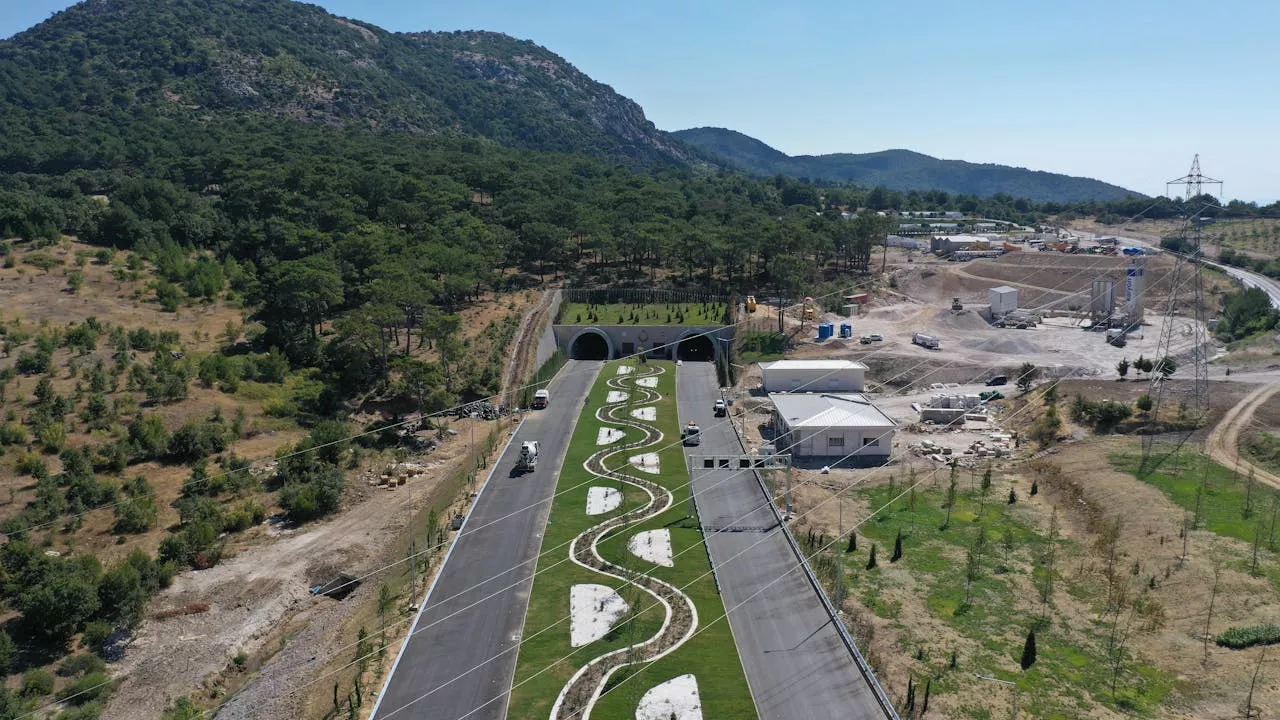
At the center of the project is the construction of the Pfaffensteig Tunnel, an approximately 11-kilometer-long twin-bore rail tunnel that will establish a direct connection between the new long-distance railway station at Stuttgart Airport and the existing Gäubahn rail line.
Each tunnel bore will carry a single rail track, allowing the route to support modern high-capacity rail operations while improving traffic efficiency and reducing travel times.
The new tunnel connection is expected to significantly shorten journey times between Stuttgart and the Swiss border, strengthening regional mobility as well as broader trans-European rail connectivity. The project is also expected to enhance passenger convenience and support long-term economic and environmental goals through expanded rail transportation infrastructure.
Industry stakeholders view the project as an important step in Germany’s wider mobility transition strategy, which aims to reduce dependence on road transport and encourage more sustainable travel alternatives.
The overall project has been divided into two major project approval sections, each involving significant engineering and construction work.
The first section focuses primarily on the main tunnel system. Approximately 11 kilometers of tunnel infrastructure will be constructed, with nearly 9.8 kilometers excavated using two large tunnel boring machines (TBMs). The use of TBMs is expected to improve efficiency and precision while minimizing disruption to surrounding areas.
Certain portions of the project, including the undercrossing of the A8 motorway and the connection to the underground long-distance railway station at Stuttgart Airport, will require conventional tunneling techniques due to technical and site-specific conditions.
These complex engineering operations are considered among the most technically demanding aspects of the project.
The second project section includes several above-ground and structural infrastructure components designed to integrate the new tunnel system into the surrounding rail network.
This phase includes the construction of a tunnel segment approximately 240 meters long using the cut-and-cover method, followed by the development of a trough structure and additional rail connections.
The project will also involve upgrades near the Sindelfingen-Goldberg S-Bahn station, including the construction of retaining walls, railway underpasses, and a grade-separated crossing to improve operational efficiency and safety.
Additionally, approximately three kilometers of above-ground rail infrastructure will be upgraded and partially realigned to accommodate trains operating at speeds of up to 200 kilometers per hour.
These enhancements are expected to improve network performance, increase capacity, and support faster and more reliable rail service throughout the region.
A notable feature of the Pfaffensteig Tunnel project is the use of an Integrated Project Delivery (IPD) partnership model, which is being applied across all major phases of the project.
Under this collaborative approach, multiple project partners work together under a shared contractual framework beginning in the final design and permitting stages. The model is intended to improve coordination, reduce inefficiencies, and accelerate decision-making throughout the project lifecycle.
According to STRABAG, the partnership-based approach allows all participating firms to contribute technical expertise early in the planning process, helping to streamline construction activities, reduce project risks, and optimize costs.
The IPD model has become increasingly popular for large-scale infrastructure and construction projects because it encourages collaboration rather than traditional segmented contracting structures.
Several STRABAG Group entities are participating in different procurement packages for the project, enabling the company to contribute expertise across multiple engineering disciplines.
The tunneling package, referred to as Package 2, will be executed by Ed. Züblin AG in a joint venture with Wayss & Freytag Ingenieurbau AG. This portion of the project focuses on the excavation and structural development of the tunnel system.
Package 3, which covers earthworks activities, will be carried out by STRABAG AG and includes major excavation, grading, and site preparation operations required for both underground and surface-level infrastructure.
Package 4, covering structural engineering work, will again be managed by Ed. Züblin AG in partnership with Wayss & Freytag Ingenieurbau AG. This package includes the construction of critical supporting infrastructure and associated structural systems.
The Pfaffensteig Tunnel project forms part of Germany’s broader investment strategy aimed at modernizing rail transportation and reducing greenhouse gas emissions through expanded use of public transit and rail infrastructure.
By improving long-distance rail connectivity and reducing travel times, the project is expected to encourage greater use of rail services while supporting economic development across southwestern Germany and neighboring regions.
The new infrastructure will also strengthen the integration of Stuttgart Airport into the national and international rail network, improving accessibility for both domestic and cross-border travelers.
Large-scale infrastructure projects such as the Pfaffensteig Tunnel also generate significant economic activity through construction employment, supply chain demand, and long-term transportation improvements.
The project is expected to involve a substantial workforce across engineering, tunneling, structural construction, and rail systems installation over multiple years.
For STRABAG and its partner companies, the contract further strengthens their positions in the European infrastructure market and reinforces their expertise in delivering technically complex transportation projects.
The award of the Pfaffensteig Tunnel contract marks a major milestone in Germany’s rail modernization efforts and highlights the growing importance of sustainable transportation infrastructure across Europe.
With advanced tunneling technology, integrated project delivery methods, and extensive collaboration among multiple engineering firms, the project is expected to play a critical role in improving rail connectivity, reducing travel times, and supporting climate-friendly mobility goals.
As construction progresses, the Pfaffensteig Tunnel is set to become one of the most significant transportation infrastructure projects in southwestern Germany, contributing to both regional development and broader European rail integration.
Source Link:https://newsroom.strabag.com/