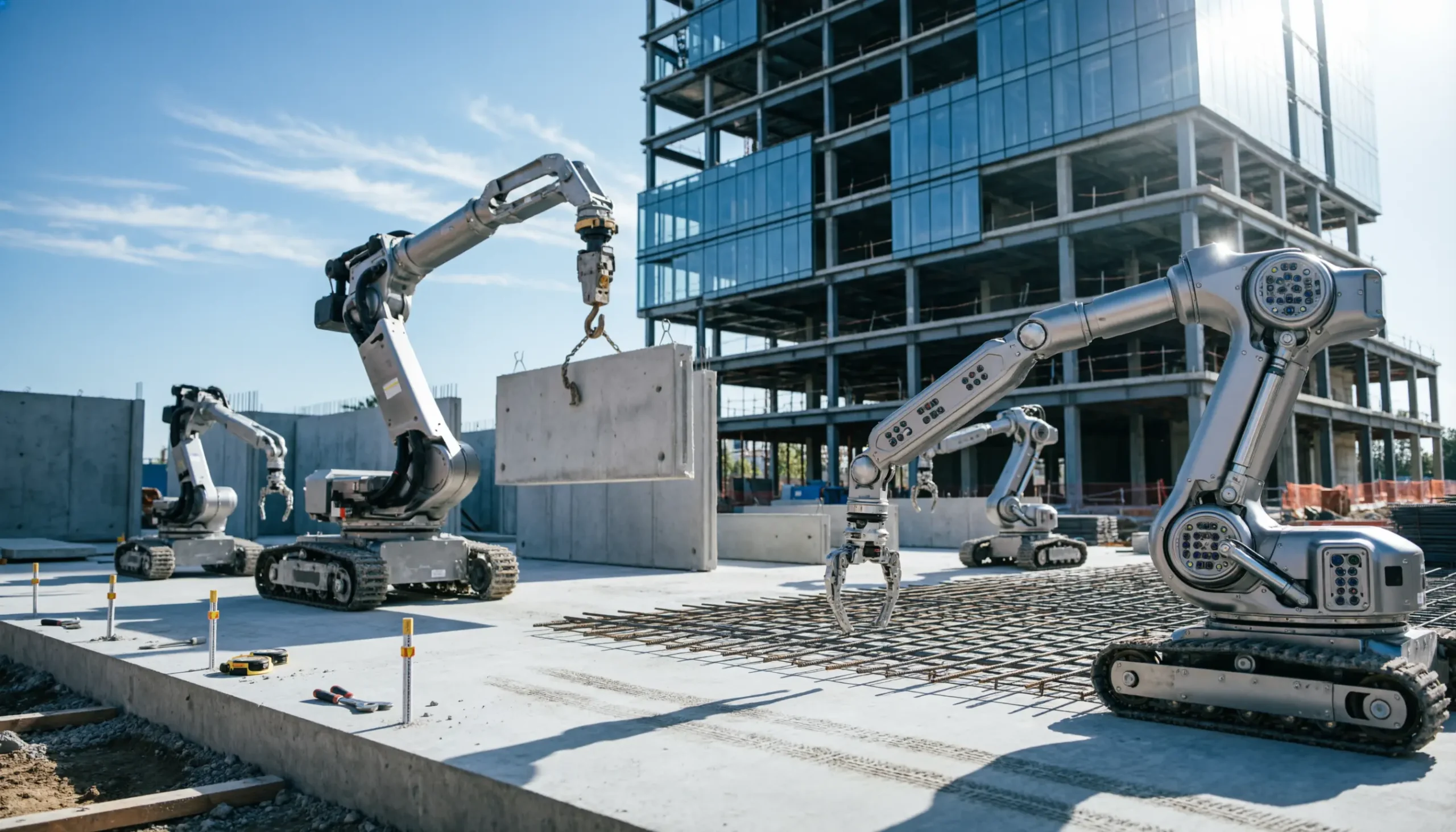
Shimizu Corporation has launched a major initiative to bring AI-powered robots into real-world construction environments, marking a significant step toward addressing the industry’s growing labor shortages while improving productivity, safety, and operational efficiency. The company has begun full-scale field testing of advanced Physical AI technologies, including humanoid robots designed for autonomous site inspections and intelligent robotic arms capable of performing painting work by learning from experienced workers.
The initiative reflects Shimizu’s long-term strategy to transform construction through artificial intelligence and robotics. By combining AI with advanced sensing technologies, the company aims to develop versatile robotic systems that can operate effectively in the constantly changing conditions found on construction sites.
Physical AI refers to a new generation of artificial intelligence that enables robots and mechanical systems to perceive, understand, and respond to real-world environments. Using cameras, sensors, and AI-powered decision-making, these systems can recognize their surroundings, adapt to changing conditions, and carry out physical tasks with minimal human intervention. Unlike traditional industrial robots that rely on fixed programming and repetitive movements, Physical AI allows robots to make real-time decisions based on environmental data, making them significantly more flexible and capable.
The construction industry has become one of the sectors most affected by labor shortages and an aging workforce. Demand for skilled workers continues to rise while the availability of experienced personnel declines. In response to these challenges, Shimizu believes AI robots can become an essential part of future construction operations by supporting workers and eventually taking over repetitive, hazardous, or labor-intensive tasks.
Historically, robots used in construction have been designed for highly specialized operations and could only perform limited, pre-programmed activities. Their usefulness was often restricted because construction sites change constantly as projects progress. Equipment, materials, and work areas are frequently relocated, making static automation difficult to implement.
Shimizu’s latest approach focuses on developing adaptable AI robots capable of working across multiple tasks rather than performing a single dedicated function. These intelligent machines are designed to operate safely in dynamic environments while interacting with complex construction settings in much the same way as human workers.
Among the company’s most promising developments are humanoid robots. Because construction sites are originally designed for people rather than machines, humanoid robots offer significant advantages. Their human-like structure enables them to move through stairways, corridors, scaffolding, and narrow pathways while interacting with existing infrastructure without requiring major modifications to the work environment.
Shimizu is currently conducting field trials with humanoid robots equipped with cameras and advanced navigation systems. These robots are capable of moving autonomously throughout construction sites while continuously monitoring surrounding conditions. By collecting visual data during routine inspections, the robots can help reduce the time and effort required for site management activities.
One of the company’s recent demonstrations took place at the Tokiwabashi Project, where a humanoid robot successfully navigated the construction site independently while carrying a camera. The robot traveled at approximately 1.0 meters per second along a predetermined inspection route, using onboard sensors and AI algorithms to recognize obstacles and evaluate real-world site conditions as it moved.
The captured images and video footage are then analyzed using AI technologies powered by multimodal Large Language Models (LLMs). These advanced AI systems can interpret both visual and textual information, allowing construction managers to identify potential safety risks, monitor work progress, detect irregularities, and improve overall site management. By automating inspection processes, Shimizu expects to reduce manual workloads while providing faster and more accurate reporting.
In addition to humanoid robots, the company is developing intelligent robotic arms capable of performing painting operations. Unlike conventional industrial robots that require detailed programming, these robotic systems learn by observing skilled human workers. Through imitation learning, they can replicate complex painting techniques and continuously improve their performance over time.
This capability represents an important advancement in preserving valuable construction expertise. As experienced workers retire, many specialized techniques risk being lost. By capturing and digitizing these skills, AI robots can help preserve technical knowledge while supporting the training of future generations of construction professionals.
To fully realize the potential of Physical AI, Shimizu is building a dedicated AI ecosystem specifically designed for construction applications. The ecosystem combines continuous data collection, AI model development, digital simulation, field testing, and ongoing performance improvements into a single development framework.
The process begins with collecting large amounts of operational data from construction sites. This information is analyzed to build AI models capable of understanding construction environments and performing practical tasks. Digital simulations are then used to evaluate robot performance before technologies are deployed in real-world projects. Feedback gathered during field trials is incorporated into future AI models, creating a continuous cycle of learning and improvement.
The company believes this construction-focused AI ecosystem will play a vital role in expanding the use of robotics across the industry while accelerating innovation in automation technologies.
Shimizu is also collaborating with technology partners, including Sony Corporation, to support the research and development of advanced AI robotics. By combining expertise in artificial intelligence, sensing technologies, and robotics with construction engineering knowledge, the partnership aims to accelerate the practical deployment of intelligent robotic systems across construction projects.
Looking ahead, Shimizu plans to broaden the range of construction activities that can be automated through AI robots. As Physical AI technologies continue to mature, the company envisions robots becoming valuable partners for construction workers, helping improve productivity, enhance workplace safety, reduce labor demands, and ensure the transfer of skilled craftsmanship to future generations.
Through continued investment in AI, robotics, and digital innovation, Shimizu is positioning itself at the forefront of the construction industry’s transformation, demonstrating how intelligent machines can help solve one of the sector’s most pressing workforce challenges while creating smarter and more efficient construction sites.
Source link: https://www.shimz.co.jp/