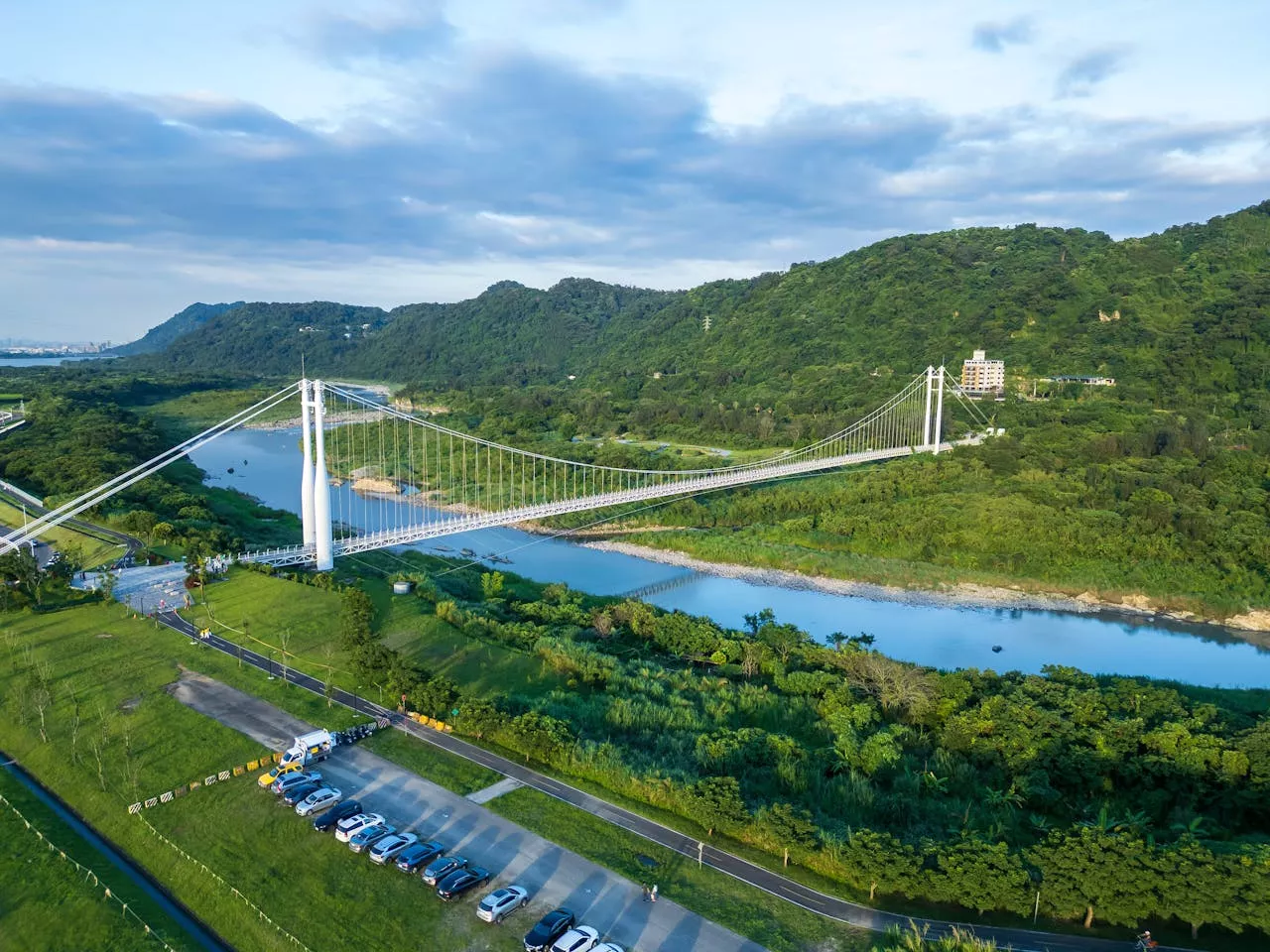
Danjiang Bridge, one of Taiwan’s most ambitious and internationally recognized infrastructure developments in recent years, has officially opened to the public with a large-scale celebration that combined architecture, engineering, culture, and the performing arts. Stretching across the mouth of the Tamsui River, the bridge is expected to become both a major transportation link and a defining modern landmark for Taiwan.
The official opening ceremony featured a series of public events designed to introduce the bridge not only as an infrastructure project, but also as a new civic and cultural destination. The celebrations included the “Danjiang Bridge Together Arts Festival,” immersive public experiences, live performances, walking activities, and a special site-specific dance performance titled Light Chain by Cloud Gate Dance Theatre. Together, these programs highlighted the bridge’s role as a space where engineering, architecture, and artistic expression intersect.
Designed by Zaha Hadid Architects, the Danjiang Bridge has drawn global attention throughout its development due to its striking architectural design and engineering innovation. The project gained additional international recognition after being selected by CNN as one of the “11 Most Important Infrastructure Projects of 2025.” This distinction made it one of the few infrastructure projects in Taiwan to receive such widespread global attention and reinforced its significance within the international design and construction community.
The bridge represents a major milestone in Taiwan’s public infrastructure development strategy. In addition to improving regional transportation connectivity, it serves as a visual and symbolic gateway to the surrounding urban and coastal environment. By spanning the Tamsui River estuary, the bridge enhances travel efficiency between surrounding districts while helping reduce traffic congestion in the region.
One of the bridge’s most distinctive features is its single-tower asymmetric cable-stayed design. Unlike conventional cable-stayed bridges that often require multiple towers, the Danjiang Bridge uses a single vertically extended tower to support the structure. This innovative approach minimizes the visual impact on the surrounding natural landscape while creating a bold and elegant architectural identity.
The bridge’s streamlined structure was carefully designed to integrate with the estuary environment and preserve scenic views of the surrounding coastline and river. The tower rises prominently above the skyline, creating a recognizable visual landmark while demonstrating a balance between structural efficiency and aesthetic sensitivity. The design reflects Taiwan’s growing expertise in integrating advanced engineering solutions with world-class architectural design.
The opening celebrations were organized around the theme “Together – March on the Bridge,” emphasizing community participation and shared public experiences. The Danjiang Bridge Together Arts Festival transformed the newly opened bridge into a vibrant cultural venue where residents and visitors could explore the structure on foot and experience it from a new perspective.
The festival featured walking events, live music performances, parades, and interactive installations designed to encourage public engagement with the bridge as more than simply a transportation route. Organizers aimed to create an atmosphere that highlighted the bridge’s role as a gathering place and a symbol of social connection.
Visitors were invited to walk across the bridge while enjoying panoramic views of the surrounding coastline, river, and cityscape. Resting zones and viewing platforms along the bridge deck provided spaces for people to pause, relax, and appreciate the environment. These areas were intentionally designed to encourage social interaction and redefine the bridge as a public urban space that combines movement, leisure, and cultural activity.
The immersive experiences also emphasized collaboration with local communities and cultural organizations. By involving regional artists, performers, and community groups, the opening program encouraged cultural exchange and collective participation. The project’s organizers viewed the celebration as an opportunity to strengthen connections between the bridge and the local identity of the Tamsui region.
A major highlight of the opening ceremony was the performance titled Light Chain, specially created by Cloud Gate Dance Theatre. The production drew inspiration from the bridge’s structural form, mechanical movement, and engineering systems, transforming these technical elements into an artistic performance. The site-specific dance presentation used the bridge itself as a performance stage, creating a powerful visual dialogue between architecture, movement, light, and sound.
The performance symbolized the relationship between human creativity and engineering achievement, illustrating how infrastructure can also serve as a platform for cultural storytelling. By integrating performing arts into the opening ceremony, the event demonstrated how public infrastructure projects can go beyond their functional purpose and become important cultural assets for society.
The Danjiang Bridge project is widely seen as a reflection of Taiwan’s evolving approach to infrastructure development, where transportation efficiency, urban design, sustainability, and cultural identity are increasingly interconnected. Rather than focusing solely on functionality, the bridge has been developed as a landmark capable of contributing to tourism, public life, and international recognition.
The project also demonstrates the growing importance of architectural identity in major public works. Through its iconic design, the bridge has already become a recognizable symbol for Taiwan, attracting attention from architects, engineers, tourists, and design enthusiasts around the world. Its presence is expected to contribute to the long-term cultural and economic development of the surrounding region.
As Taiwan continues investing in modern infrastructure, the Danjiang Bridge stands as an example of how engineering innovation and public space design can work together to create projects that serve both practical and social purposes. The successful completion and opening of the bridge mark an important achievement for the country’s construction and infrastructure sectors.
Beyond its transportation benefits, the bridge now represents a new civic destination where residents and visitors can gather, experience cultural events, and connect with the natural environment. Through its combination of design excellence, engineering achievement, and community engagement, the Danjiang Bridge is expected to remain one of Taiwan’s most iconic modern landmarks for years to come.
Source Link:https://www.businesswire.com/