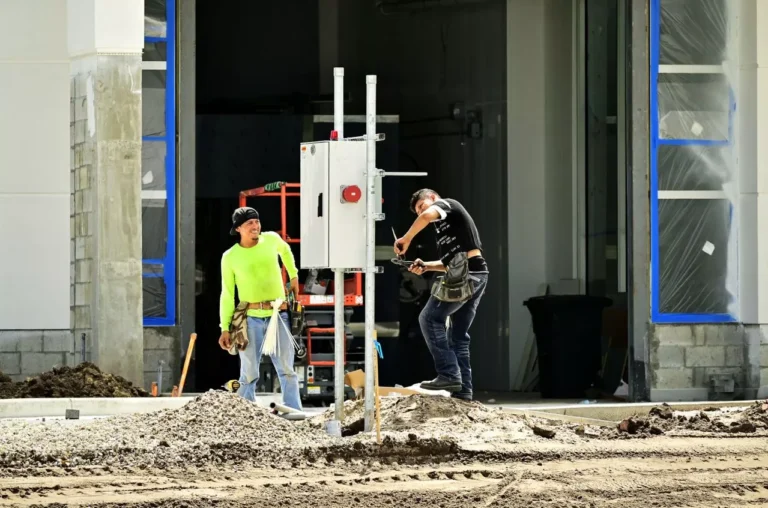

U.S. construction cost pressures are increasingly shifting from labor toward materials, as higher commodity prices, tariffs, supply constraints and strong demand from data centers and infrastructure projects push construction input costs higher. According to Cushman & Wakefield’s latest Construction Insights for Global Occupiers report, construction-related commodity prices increased 13.3% year over year (YOY), significantly accelerating from the previous year.
The latest increase represents more than 4.7 times the rate recorded a year earlier. Metal-related commodities have been among the largest contributors to the increase, with aluminum prices rising 40.9%, copper base scrap increasing 39.3%, and nonferrous metals climbing 38.5%.
At the same time, construction labor cost growth has moderated. While skilled workers remain in demand, particularly in specialized trades, slower wage growth means materials and equipment are becoming increasingly important drivers of overall construction cost escalation.
“The pressure on construction costs hasn’t disappeared, but its source is changing,” said Tyler Paytas, Global Head of Programs & Projects, Global Occupier Services at Cushman & Wakefield. “Labor remains constrained, particularly in specialized trades, but materials and equipment are increasingly driving escalation. For occupiers planning projects, that means the cost environment can remain challenging even as wage growth moderates.”
The shift in construction inflation is reflected in several industry cost indicators. The ENR Building Cost Index increased 4.7% YOY in August, while its skilled labor component rose 1.5%.
Construction material prices also continued to increase throughout the summer. Overall construction materials recorded monthly increases of at least 1.0% for three consecutive months through August. Annual material price growth accelerated from 6.5% in June to 8.5% in August.
Metals have emerged as a particularly significant source of cost pressure. Aluminum, copper-related products and other nonferrous metals are essential components of numerous construction systems and building products. Price increases in these materials can therefore affect a broad range of construction projects.
The combination of tariffs and supply constraints is adding further uncertainty for project owners and occupiers. Companies planning new construction or major renovations may face greater difficulty forecasting material costs when commodity prices are moving rapidly.
Electrical equipment is another area where construction costs are facing substantial pressure. Prices for electrical machinery and equipment increased 13.0% YOY, while switchgear prices rose 9.0%.
Several major investment trends are contributing to demand for electrical equipment. Grid modernization, renewable energy development and rapid data center construction are all increasing requirements for transformers, switchgear and other electrical infrastructure.
Transformer and switchgear costs are expected to accelerate further toward the end of the year as copper supply constraints continue to affect the market. Copper is an essential material in electrical infrastructure, making supply and pricing trends particularly important for projects with significant power requirements.
For data center developers, electrical equipment represents a critical part of project delivery. The scale of power infrastructure required by modern data centers means that changes in transformer, switchgear and other equipment costs can have a meaningful impact on overall project budgets.
The changing cost environment is occurring alongside a construction market that is becoming increasingly divided by sector.
Data centers and infrastructure projects continue to support construction activity, while several traditional commercial real estate sectors remain comparatively subdued. Contractors involved in data center construction reported an average backlog of 11.0 months, compared with 8.5 months for contractors without data center exposure.
Infrastructure construction also maintained a substantial project pipeline. Infrastructure backlog reached 10.1 months in June, representing a 7.9% increase from a year earlier.
Strong demand from these sectors is helping sustain construction activity and creating additional demand for materials, equipment and skilled workers. However, the concentration of activity in major projects can also place pressure on shared supply chains.
“The construction market is increasingly a story of two markets,” said Ethan Tribble, Senior Research Analyst, Global Research at Cushman & Wakefield. “Data centers, infrastructure and other large projects are generating significant demand for materials, electrical equipment and specialized labor even as pipelines remain much thinner across traditional sectors.”
While large infrastructure and technology projects continue to move forward, broader commercial construction activity remains more challenging.
Commercial and industrial architectural billings registered 46.7 in June, below the 50-point threshold that indicates growth. The measure has remained below 50 for nine of the past 10 months, pointing to continued weakness in the broader nonresidential construction pipeline heading into 2027.
This divergence creates different conditions for contractors, developers and occupiers depending on their project type. Organizations involved in data centers, infrastructure, healthcare, manufacturing and utilities may continue to experience strong demand for construction services, while companies focused on traditional commercial sectors may face a slower project environment.
The uneven market is also contributing to volatility in construction starts. New construction starts increased 33.5% month over month in May as major healthcare, manufacturing, utilities and data center projects moved forward. That increase was followed by a 20% decline in June.
The latest cost trends highlight the importance of closely monitoring material markets as companies plan construction projects. Although labor remains an important component of construction budgets, the latest data suggests that materials and equipment are playing a growing role in cost escalation.
Metal prices, electrical equipment availability, tariffs and supply constraints could remain important considerations for project owners through the remainder of the year. Projects requiring significant quantities of steel, aluminum, copper or electrical equipment may be particularly exposed to commodity price movements.
For occupiers and developers, the changing inflation environment may require greater attention to procurement schedules, material sourcing and project budgeting. Early planning and close coordination with contractors and suppliers can help project teams better understand potential cost exposure.
Overall, Cushman & Wakefield’s findings indicate that U.S. construction inflation is entering a different phase. Labor cost growth has moderated, but rising material and equipment prices are creating new pressures. At the same time, strong activity in data centers and infrastructure is sustaining demand for construction resources while traditional commercial sectors continue to face softer conditions.
As the market moves toward 2027, the balance between material costs, equipment demand, labor availability and sector-specific construction activity will remain an important factor shaping project budgets and development decisions across the U.S. construction industry.
Source Link:https://www.businesswire.com/