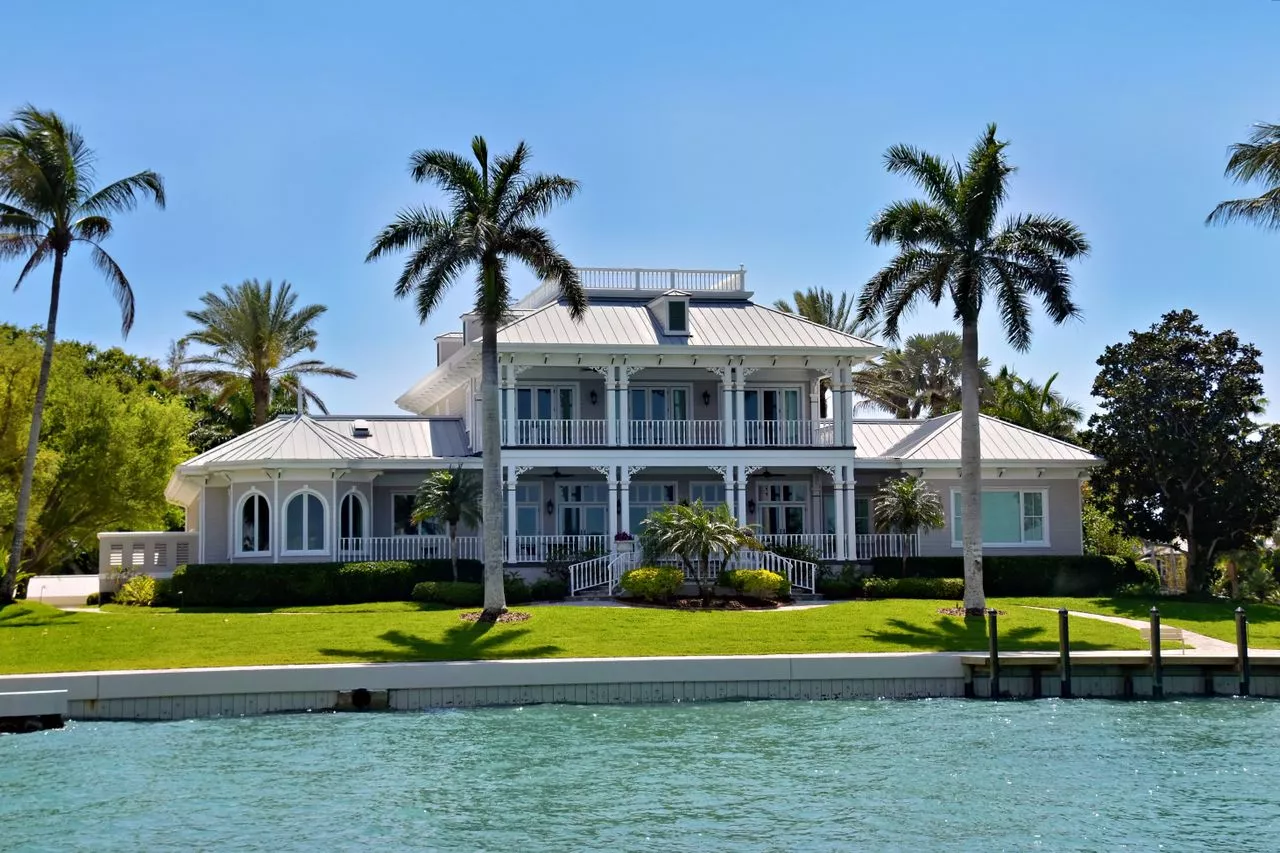
In the realm of American real estate, South Florida is currently standing in a category of its own. According to a recent report from the real estate brokerage Redfin, the divide between ultra-luxury properties and standard housing in the Sunshine State has widened to historic proportions, solidifying the region’s status as the nation’s premier “wealth magnet.”
The data, which analyzes the three-month period ending in May 2026, reveals that the typical luxury home in West Palm Beach commanded a staggering $4.51 million—a price point roughly 8.9 times higher than the median non-luxury home in the same area. This ratio is not merely an anomaly; it represents the largest luxury home price premium among the 49 most populous metropolitan areas in the United States.
West Palm Beach is not alone in this dramatic market bifurcation. Neighboring Miami follows closely behind, with luxury homes selling for 8.8 times the price of typical non-luxury dwellings. To put these numbers into perspective, the national average luxury-to-non-luxury price ratio sits at 3.6. South Florida’s figures are more than double the national norm, signaling a market characterized by intense competition at the top tier and a stark separation between the ultra-wealthy and the rest of the housing market.
When compared to other high-cost markets, the South Florida gap remains unparalleled. New York City, which occupies the third spot on the list, sees luxury homes priced at 5.5 times the cost of typical homes. Los Angeles follows at 4.9, and Phoenix at 4.8. While these cities also contend with high entry points for luxury real estate, they lack the extreme “multiplier effect” seen in South Florida.
Why has South Florida become the epicenter of this luxury-to-non-luxury price divide? Redfin Principal Economist Sheharyar Bokhari points to a “perfect storm” of incentives.
“West Palm Beach and Miami are wealth magnets for ultra-rich Americans thanks to Florida’s favorable tax environment, warm climate, and waterfront lifestyle,” Bokhari explained. While the beaches and international connectivity draw global attention, the tax advantages remain a primary catalyst for the ultra-wealthy. This combination consistently funnels demand into the luxury sector, keeping prices at the high end elevated even when other segments of the market face headwinds.
On the ground, the demographic shift is palpable. Redfin Principal Agent Dina Blau, based in West Palm Beach, notes that the luxury buyers of 2026 are distinct from those of previous cycles. They are younger, increasingly migrating from high-cost hubs like New York, New Jersey, and California, and are driven by a fundamental change in how they work and live.
“We’re seeing strong migration from high-cost metro areas,” Blau noted. “Many buyers are relocating earlier in life—often in their 40s and 50s—driven by remote and hybrid work capabilities, tax advantages, and the desire for lifestyle flexibility.”
Nationwide, the luxury real estate market is demonstrating remarkable resilience. While the typical American homebuyer has been largely sidelined by a combination of high property prices and mortgage rates, the ultra-wealthy are seemingly unfazed. In May, luxury home prices increased at nearly five times the speed of non-luxury prices.
This divergence suggests that the upper echelon of the market operates on a different economic plane. For the ultra-rich, these purchases are often driven by asset diversification and lifestyle preferences rather than interest-rate sensitivity.
Conversely, markets like Portland, Oregon, Sacramento, California, and Columbus, Ohio, show significantly tighter spreads, with luxury homes costing less than three times the price of the typical home. These cities highlight a more compressed market, where the disparity between luxury and standard living remains more moderate.
As South Florida continues to solidify its reputation as a haven for the global elite, the “wealth magnet” effect appears poised to persist. For the foreseeable future, the divide between the luxury lifestyle and the broader housing market in the region will remain a defining feature of the American real estate landscape, underscoring the deep-seated demand for a lifestyle that remains out of reach for all but the most affluent.
Source Link:https://www.businesswire.com/