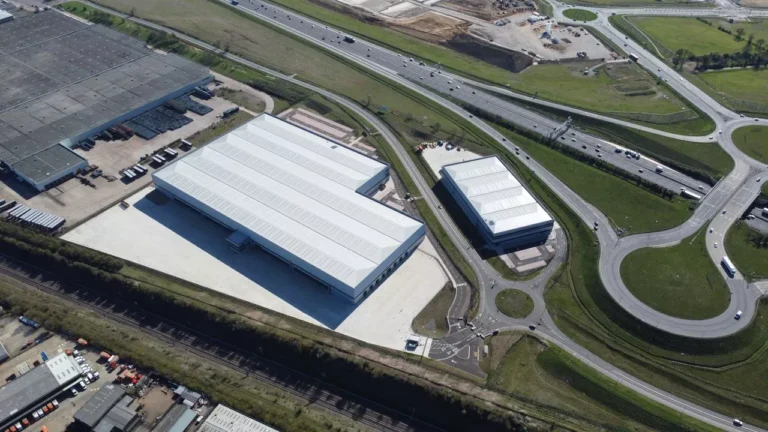
Red Metals, an emerging copper manufacturing company focused on reshaping the domestic metals supply chain, has announced the successful completion of a $10 million Seed funding round alongside plans to develop a $70 million copper refining and manufacturing facility in Charleston, South Carolina. The project represents a significant step toward restoring copper refining capacity in the United States and strengthening the nation’s industrial infrastructure.
The company’s first production facility is expected to create at least 45 jobs during its initial phase of operations and will introduce an innovative refining process designed to produce finished copper products domestically. By reducing dependence on overseas processing and shortening supply chains, Red Metals aims to address a growing challenge facing the U.S. economy: securing reliable access to refined copper for critical industries.
The Seed funding round attracted a notable group of investors led by Gigascale Capital, with additional participation from Future Ventures, MCJ, and entrepreneur JB Straubel, the founder and CEO of Redwood Materials and co-founder of Tesla. The investment reflects increasing confidence in industrial technologies that can help reshore manufacturing and strengthen domestic supply chains.
In addition to private investment, Red Metals has secured economic development incentives from the State of South Carolina and Charleston County. These incentives will support the construction and operation of the company’s first commercial-scale facility and reinforce regional efforts to attract advanced manufacturing projects.
The combination of private capital and public support positions Red Metals to accelerate development while contributing to local economic growth through job creation and industrial investment.
Copper has become one of the most strategically important materials in the global economy. It plays a critical role in electrical systems, renewable energy infrastructure, batteries, electric vehicles, data centers, telecommunications networks, defense technologies, and a wide range of manufacturing applications.
As the world continues its transition toward electrification and digital infrastructure, demand for copper is increasing rapidly. Industry forecasts indicate that U.S. copper consumption could rise by more than one million metric tons annually by 2035. This surge in demand is expected to contribute to a domestic copper market valued at more than $45 billion.
Despite this growing need, the United States faces a significant challenge. Domestic copper production and refining capacity have declined over the years, increasing reliance on international suppliers. Analysts project that the country could face a refined copper supply deficit exceeding 2.5 million metric tons annually by 2035, even if all currently planned mining projects move forward as expected.
This widening gap has raised concerns among policymakers, manufacturers, and energy developers who depend on reliable access to copper for future growth.
One of the primary reasons for the domestic supply gap lies in the complexity of the traditional copper refining process.
Conventional copper production involves multiple stages, beginning with mined ore and moving through several intermediate forms before reaching a finished product. These stages often include concentrate, matte, anode, cathode, and copper rod production.
The process was originally designed for ore bodies that contain very low concentrations of copper, often less than one percent. As a result, large quantities of material must be transported, processed, and refined through multiple facilities and operators before reaching the purity levels required for industrial applications.
This traditional model consumes significant amounts of energy, requires extensive logistics networks, and often involves shipping materials across international borders. The result is a supply chain that can be expensive, time-consuming, and vulnerable to disruptions.
Red Metals believes it has developed a more efficient alternative.
According to Founder and CEO Jackson Switzer, the company’s refining technology is designed to simplify the production process by integrating multiple operations into a single continuous system.
“America has the feedstocks, the demand, and the workforce to produce copper domestically at scale,” said Switzer. “What it has lacked is an economically viable refining process. Red Metals is building an integrated, modern model that converts copper feedstocks directly into finished products closer to where they’re needed, reducing supply chain complexity while strengthening domestic manufacturing.”
The company’s approach combines physical processing, advanced sorting technologies, and metallurgical refining into one streamlined operation. Rather than moving material through several intermediate stages, Red Metals intends to transform copper feedstocks directly into finished products suitable for industrial use.
This model is expected to reduce production costs, shorten processing times, lower emissions, and improve supply chain efficiency.
A key feature of Red Metals’ strategy is its ability to work with multiple feedstock sources. Initially, the company plans to focus on processing domestically available copper scrap.
Using recycled copper as a primary feedstock offers several advantages. It helps reduce waste, lowers environmental impact, and supports a circular economy by keeping valuable materials within the domestic manufacturing ecosystem.
The company’s process is designed to remain flexible, allowing it to adapt to changing market conditions and available raw material sources while maintaining production efficiency.
By creating a commercially viable pathway for domestic copper recycling and refining, Red Metals hopes to contribute to both sustainability goals and industrial resilience.
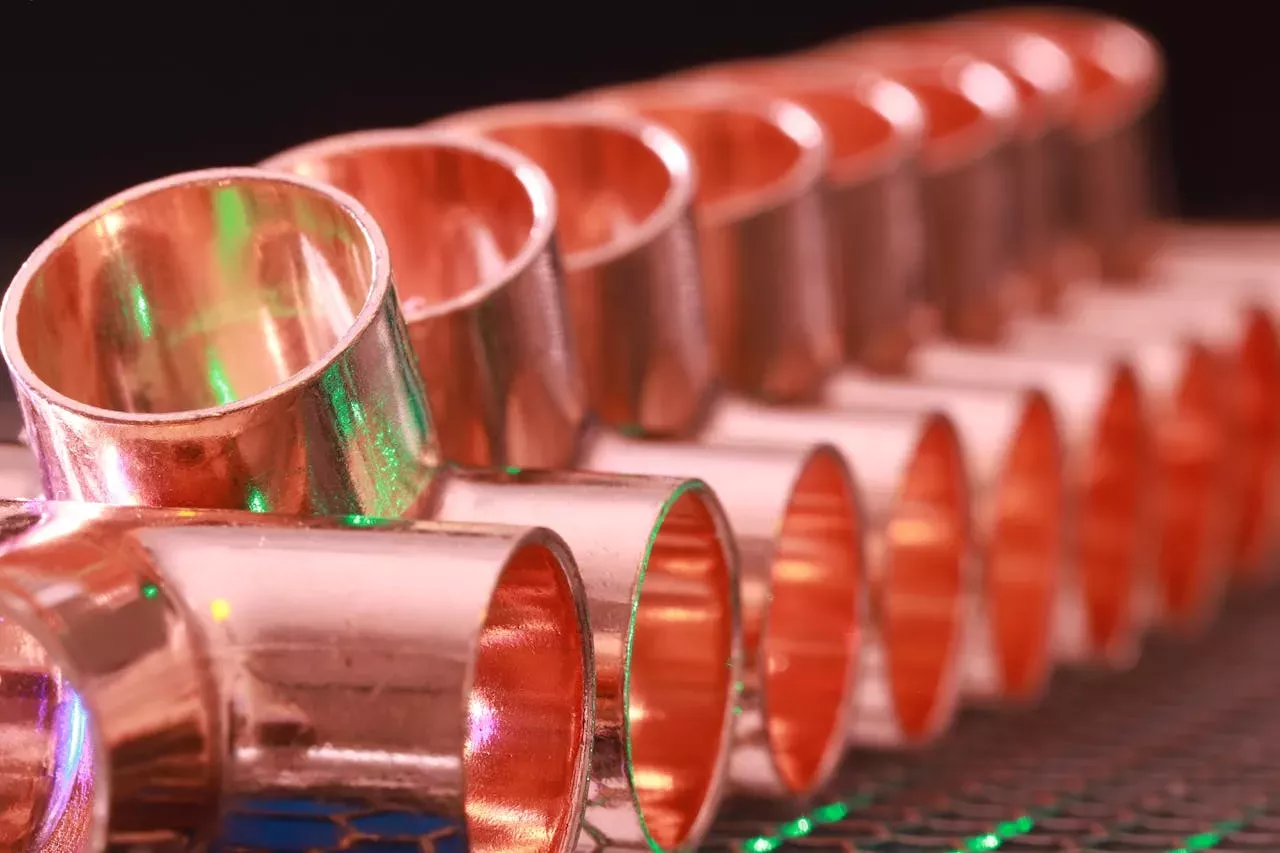
The Charleston facility’s first commercial product will be high-conductivity copper rod, a fundamental material used throughout the electrical industry.
Copper rod serves as the primary input for wire production, magnet wire manufacturing, electrical transmission systems, and numerous industrial applications. As demand for electrical infrastructure and clean energy technologies continues to expand, the need for domestically produced copper rod is expected to grow substantially.
Producing this material within the United States could help manufacturers reduce supply chain risks while supporting critical infrastructure projects.
Industry leaders involved in the funding round believe Red Metals is addressing a significant national need.
JB Straubel emphasized the importance of rebuilding domestic refining and manufacturing capabilities, noting that electricity generation, transportation systems, and industrial development all depend on copper.
Investors also highlighted the company’s combination of technological innovation and operational expertise as a key differentiator. According to Gigascale Capital Partner Victoria Beasley, demand for domestically refined copper is strong, but the infrastructure required to meet that demand remains limited.
As construction plans move forward in Charleston, Red Metals aims to demonstrate that advanced manufacturing and resource processing can once again thrive in the United States. By combining innovative technology, strategic investment, and domestic production capabilities, the company is positioning itself to play a meaningful role in securing America’s copper supply chain for decades to come.
Source Link:https://www.businesswire.com/