
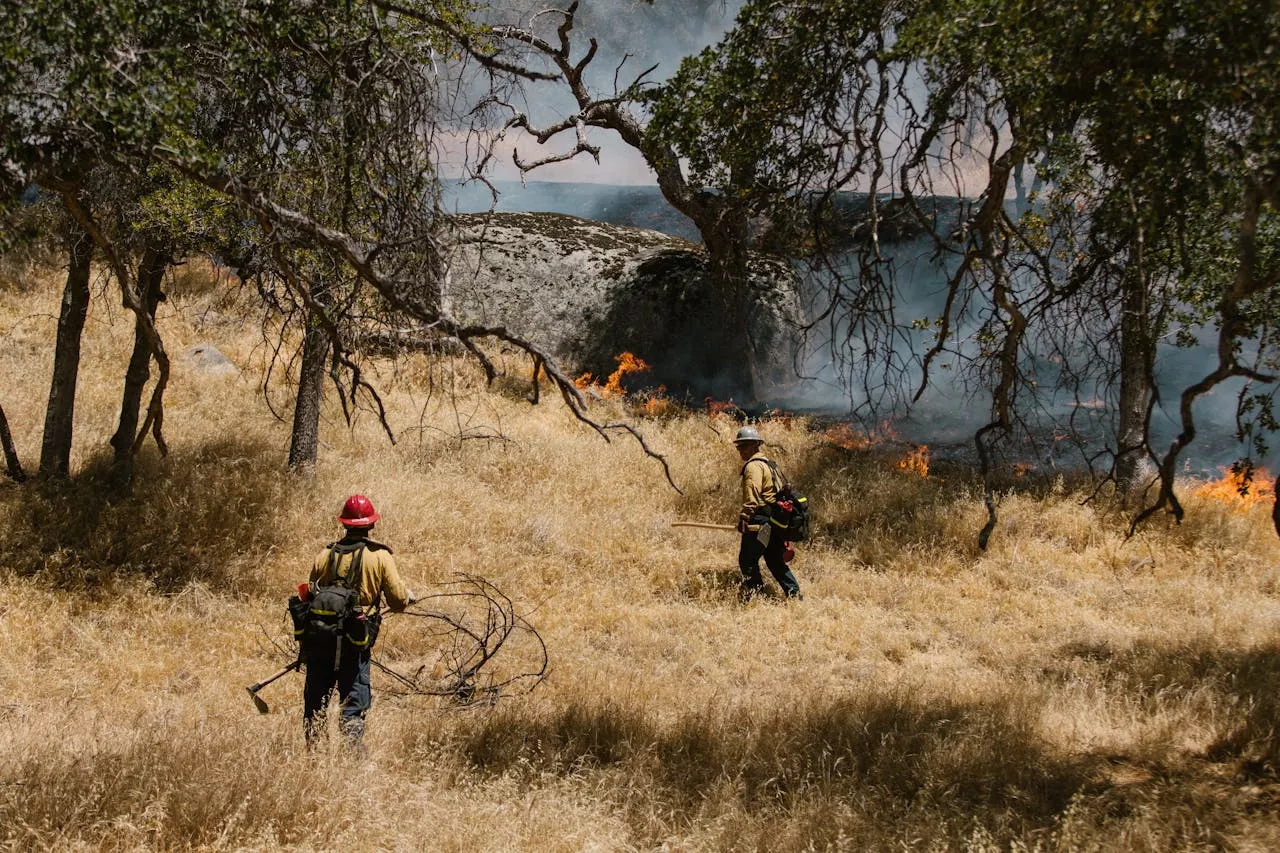
As California continues to face increasingly severe wildfire seasons, fire agencies across the state are searching for innovative technologies that can improve response efficiency, reduce dependence on water resources, and strengthen early-stage fire suppression capabilities. In response to these growing challenges, Sonic Fire Tech, a NASA-inspired fire technology startup specializing in acoustic fire suppression systems, has announced a major statewide initiative aimed at testing its advanced infrasound-based firefighting technology in real-world operational environments.
The company revealed plans to distribute 100 acoustic fire suppression backpack systems to fire departments throughout California as part of a large-scale operational research and evaluation campaign. The initiative is designed to allow firefighters, wildfire specialists, and emergency response agencies to assess the system’s effectiveness in controlled field conditions and wildfire initial-attack scenarios.
The program arrives at a critical time for California’s fire services. Rising temperatures, prolonged drought conditions, and expanding wildland-urban interface zones have significantly increased wildfire risks throughout the state. Fire departments are also dealing with mounting operational pressures, including water shortages, difficult terrain access, and the growing complexity of managing fires in densely populated areas.
Traditional firefighting approaches often depend heavily on water, foam, or chemical retardants, all of which present logistical limitations in remote environments or during extended wildfire incidents. Sonic Fire Tech’s new system aims to introduce an alternative suppression method that could complement existing firefighting strategies, particularly during the earliest stages of ignition when rapid intervention is most effective.
According to the company, approximately 25 percent of the available participation slots for the initiative have already been claimed. Interest in the program is continuing to grow among municipal fire departments, wildfire research organizations, Firewise groups, and Fire Safe community alliances across California.
At the center of the initiative is the Sonic Backpack, a portable acoustic suppression unit that uses low-frequency sound waves instead of water or chemicals to interfere with combustion. Inspired by thermoacoustic research originally associated with NASA studies, the technology is designed to suppress fires during their incipient or early ignition stages.
Unlike conventional suppression systems that extinguish flames through cooling or chemical interruption, the Sonic Backpack utilizes targeted acoustic energy intended to destabilize combustion processes. By disrupting the airflow and combustion dynamics that sustain flames, the system seeks to suppress ignition without leaving behind residue or causing water-related property damage.
Sonic Fire Tech believes the technology could become especially useful in environments where traditional suppression methods face limitations. The company says the system may offer advantages in remote wildfire zones, urban areas with water supply constraints, homeless encampment fire response situations, and locations where minimizing collateral damage is important.
Each demonstration unit included in the California initiative carries an estimated value of approximately $25,000. The portable backpack platform is engineered to provide more than two hours of runtime on a single charge, allowing firefighters extended operational flexibility during field deployments and testing exercises.
The technology is currently being evaluated for a range of applications, including residential and commercial initial-attack scenarios, wildfire hotspot suppression, and operations within the wildland-urban interface where homes and infrastructure meet undeveloped vegetation areas. These zones remain among the most vulnerable regions during California wildfire seasons.
In addition to wildfire response, the system may also prove valuable in urban firefighting operations where rapid ignition suppression is necessary but water use may present challenges. Fire departments in major California cities are increasingly encountering fires in complex urban environments where mobility, speed, and access limitations require adaptable solutions.
Participating agencies involved in the initiative will conduct operational evaluations focusing on several performance categories. These include mobility in field conditions, battery runtime, ease of deployment, user handling, and effectiveness in suppressing early-stage ignition events under controlled testing environments.
The initiative is not intended to replace traditional firefighting tools but rather to explore how acoustic suppression systems could serve as an additional resource within broader fire response strategies. By gathering operational data directly from firefighters and emergency personnel, Sonic Fire Tech hopes to refine the technology and better understand its practical applications in real-world conditions.
Remington Hotchkis, Chief Commercialization Officer of Sonic Fire Tech, emphasized that the primary goal of the campaign is to place the technology directly into the hands of frontline responders and collect meaningful operational feedback that can guide future development.
“This campaign is about putting the Sonic Fire Tech Backpack directly into the hands of firefighters and generating real-world operational data to inform further technical development,” Hotchkis explained.
He added that the company sees significant potential for acoustic suppression systems in environments where rapid ignition control is critical and where water availability or refill logistics can slow response efforts.
“We believe acoustic suppression technology has the potential to become an important tool for the fire service, especially in environments where incipient-stage fires can be suppressed without significant collateral damage and where water availability, refill logistics, or collateral damage are major limitations,” he said.
The initiative also reflects the broader trend of emerging technology companies working alongside public safety agencies to modernize firefighting operations. As climate conditions intensify and wildfire incidents become more frequent and destructive, fire departments are increasingly open to evaluating unconventional tools that could improve suppression speed and operational flexibility.
California has experienced some of the most destructive wildfire seasons in modern history over the past decade. Millions of acres have burned, communities have been displaced, and firefighting resources have been stretched to unprecedented levels. These challenges have accelerated interest in next-generation firefighting technologies ranging from drones and artificial intelligence to robotics and alternative suppression systems.
Acoustic fire suppression remains a relatively new area of development within the firefighting industry, and large-scale operational testing programs such as Sonic Fire Tech’s California initiative are expected to provide valuable insights into the practicality and effectiveness of the technology.
Researchers and fire professionals will likely pay close attention to the results of these evaluations as departments continue exploring methods to improve response times, reduce environmental impact, and enhance firefighter safety.
If successful, the Sonic Backpack could represent an important step toward diversifying the tools available to emergency responders during the critical early moments of fire ignition. Early-stage suppression is widely recognized as one of the most effective strategies for preventing small fires from escalating into large-scale incidents, particularly in wildfire-prone regions like California.
By combining advanced acoustic engineering with portable deployment capabilities, Sonic Fire Tech aims to offer fire agencies a new option for addressing some of the most pressing challenges facing modern firefighting operations.
As the statewide evaluation campaign moves forward, the company hopes the operational data gathered from California fire departments will help shape the next generation of acoustic fire suppression systems and contribute to the future evolution of wildfire response technology.
Source Link:https://www.businesswire.com/