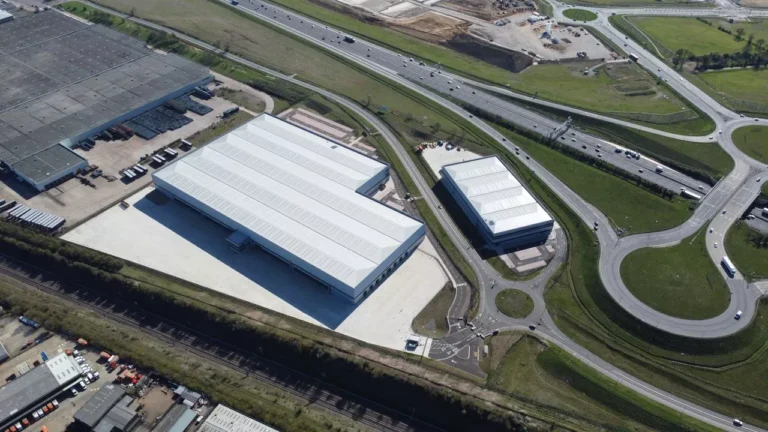

CoStar Group has reported a notable shift in the big-box warehouse market across the Midlands, signaling what may be an important turning point after several years of rising supply. According to the firm’s latest data and analysis, the volume of available large-scale logistics and distribution space has begun to decline following a peak reached around the start of the year. This change reflects a combination of strengthening occupier demand and a slowdown in new construction activity, both of which are gradually reshaping market dynamics.
In recent months, total availability of big-box warehouse space—typically referring to units exceeding 100,000 square feet—has decreased by approximately 5 million square feet. This marks a reversal from the sustained increase in supply seen over previous years, when developers responded aggressively to booming demand from e-commerce, retail distribution, and third-party logistics operators. While the recent drop is significant, overall availability remains elevated by historical standards, currently sitting at around 30 million square feet across the region.
The reduction in supply is being driven in large part by renewed occupier activity. Businesses are becoming more proactive in securing space, often committing earlier in the development cycle rather than waiting for completed units to come to market. This shift in behavior reflects both increased confidence among occupiers and a growing awareness that prime logistics space may become harder to secure if current trends continue. Demand has been particularly strong in established distribution hubs with excellent transport connectivity, especially those located near major motorway networks that enable efficient national and regional distribution.
Grant Lonsdale, Senior Director of Market Analytics at CoStar Europe, noted that this early-mover behavior is becoming more pronounced. He highlighted that approximately 6 million square feet of space has already been taken up across the Midlands in the early part of the year alone. This level of absorption underscores the resilience of demand, even amid broader economic uncertainties, and suggests that occupiers are prioritizing strategic location and long-term operational efficiency.
At the same time, the pipeline of new warehouse construction has begun to contract significantly. Developers, who had previously ramped up building activity to meet strong demand, are now adopting a more cautious approach. Rising construction costs, tighter financing conditions, and a desire to avoid oversupply have all contributed to this slowdown. As a result, a substantial portion of the space currently under construction—estimated at around 70%—has already been pre-let to tenants before completion. This pre-letting trend limits the amount of new speculative space entering the market and reduces the risk of vacancy spikes in the near term.
The scale of the slowdown in development is notable. The current construction pipeline stands at approximately 9.3 million square feet, representing a 40% decline compared to levels seen two years ago. When measured against the peak construction activity of 2022, the pipeline has effectively been cut in half. This sharp reduction indicates a clear shift in developer sentiment and suggests that supply growth will remain constrained in the short to medium term.
These evolving conditions are beginning to influence pricing and leasing dynamics. During the period of elevated supply, tenants often had greater negotiating power, benefiting from incentives such as rent-free periods or flexible lease terms. However, as availability tightens and demand strengthens, the balance of power is gradually shifting. Landlords, particularly those with high-quality, well-located assets, are likely to regain some leverage in negotiations.
According to Lonsdale, the market is entering a phase where rental levels and incentive packages may begin to stabilize after a period of relative softness. While significant, broad-based rental growth is not expected in the immediate term, there is potential for selective increases in prime locations and best-in-class developments. Properties that offer modern specifications, sustainability features, and strong connectivity are likely to command the highest levels of interest and pricing.
The Midlands continues to play a crucial role in the UK’s logistics and distribution network. Its central location, combined with access to key transport infrastructure, makes it an attractive base for companies seeking to optimize supply chains and reduce delivery times. As such, the region remains a focal point for both occupiers and investors, even as market conditions evolve.
Looking ahead, the interplay between demand and supply will be critical in determining the trajectory of the big-box warehouse sector. If occupier demand remains robust and development activity stays constrained, the current trend of declining availability could continue, further tightening the market. Conversely, any significant economic slowdown could temper demand and alter the balance once again.
For now, the data from CoStar points to a market that is stabilizing after a period of rapid expansion and adjustment. The decline in supply, combined with steady take-up and reduced construction activity, suggests that the Midlands big-box sector is entering a more balanced phase. This transition could create a healthier environment for both landlords and tenants, characterized by more sustainable growth and improved long-term stability.
In summary, the Midlands big-box warehouse market appears to be at a pivotal moment. With supply beginning to fall, demand holding firm, and development slowing, the sector is moving away from the oversupply concerns of recent years toward a more equilibrium-driven outlook.
Source Link:https://www.businesswire.com/